Services
Cooling / AC System Servicing
Servicing a car’s air conditioning (AC) system is essential for maintaining its efficiency and ensuring comfort during hot weather. The process involves inspecting, cleaning, and sometimes replacing various components of the AC system. Here are the detailed steps for servicing a car AC system:
Components of a Car AC System
- Compressor: Compresses the refrigerant and circulates it through the system.
- Condenser: Releases heat from the refrigerant to the outside air.
- Evaporator: Absorbs heat from the inside air, cooling it down.
- Expansion Valve/Orifice Tube: Regulates the flow of refrigerant into the evaporator.
- Receiver-Drier/Accumulator: Removes moisture and filters debris from the refrigerant.
- Refrigerant: The fluid that absorbs and releases heat to cool the interior of the vehicle.
How to Service a Car AC System
1. Safety Precautions
- Ensure the vehicle is parked in a well-ventilated area.
- Wear safety goggles and gloves.
- Avoid direct contact with refrigerant as it can cause frostbite and is harmful if inhaled.
2. Visual Inspection
- Inspect all visible components for signs of wear, damage, or leaks.
- Check the condition of the belts and hoses connected to the AC system.
- Look for oil stains around the compressor, condenser, and fittings, indicating potential refrigerant leaks.
3. Check Refrigerant Level
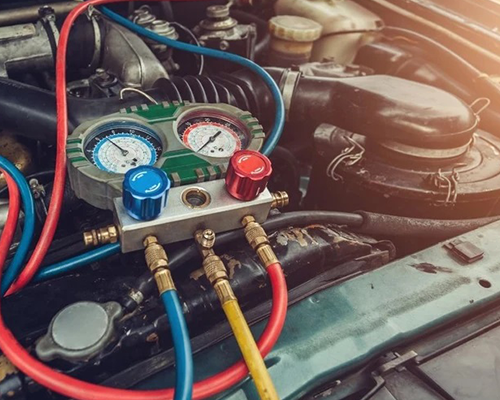
- Use a manifold gauge set to check the refrigerant pressure.
- Attach the manifold gauge set to the low and high-pressure service ports.
- Compare the pressure readings with the manufacturer’s specifications to determine if the refrigerant level is correct.
- If the refrigerant level is low, there may be a leak that needs to be addressed before refilling.
4. Testing the AC System
- Start the engine and turn on the AC to its maximum setting.
- Listen for unusual noises from the compressor and other components.
- Use a thermometer to measure the temperature of the air blowing from the vents. It should be significantly colder than the ambient temperature.
- Check the operation of the AC clutch and make sure it engages and disengages properly.
5. Leak Detection
- Use an electronic leak detector or UV dye to identify refrigerant leaks.
- If using UV dye, add the dye to the system and run the AC for a short period, then inspect with a UV light.
- Repair any identified leaks before recharging the system.
6. Recharging the AC System
- Evacuate the system using a vacuum pump to remove air and moisture.
- Refill the system with the correct type and amount of refrigerant specified by the manufacturer.
- Monitor the pressure readings during recharging to ensure proper levels are achieved.
7. Cleaning the System
- Clean the condenser coils to ensure efficient heat exchange. Use a soft brush or compressed air.
- Replace the cabin air filter to maintain good airflow and air quality inside the vehicle.
8. Component Replacement (if necessary)
- Replace any worn or damaged components such as the compressor, condenser, evaporator, or expansion valve.
- If the receiver-drier or accumulator is replaced, ensure the system is recharged properly.
Preventive Maintenance Tips
- Run the AC system periodically, even during cooler months, to keep the system lubricated.
- Regularly check and replace the cabin air filter.
- Have the AC system inspected and serviced annually by a professional to catch potential issues early.
- Keep the condenser clean and free of debris.
By following these steps, you can maintain your car’s AC system, ensuring it operates efficiently and provides reliable cooling when needed.