Services
Clutch System Servicing
Servicing a vehicle’s clutch system is essential for ensuring smooth gear transitions and overall driving performance. The clutch system typically includes the clutch pedal, clutch disc, pressure plate, release (throwout) bearing, and the hydraulic or mechanical linkage. Here’s a detailed guide on how to service the vehicle clutch system:
Components of a Vehicle Clutch System
- Clutch Pedal: Engages and disengages the clutch.
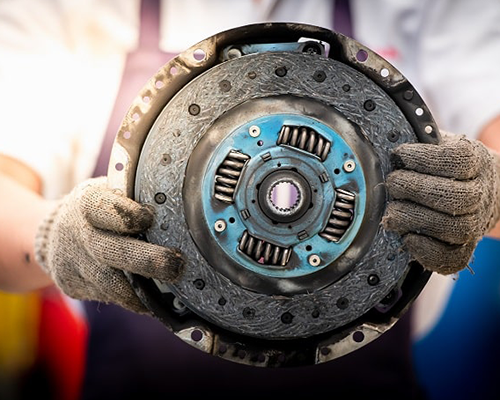
- Clutch Disc: Engages with the flywheel to transfer power from the engine to the transmission.
- Pressure Plate: Holds the clutch disc against the flywheel.
- Release (Throwout) Bearing: Disengages the clutch when the pedal is pressed.
- Flywheel: Connects to the engine crankshaft and provides a friction surface for the clutch disc.
- Hydraulic System (if applicable): Includes the master cylinder, slave cylinder, and hydraulic lines.
- Mechanical Linkage (if applicable): Connects the clutch pedal to the clutch release mechanism.
How to Service a Vehicle Clutch System
1. Safety Precautions
- Park the vehicle on a flat, level surface.
- Use wheel chocks to prevent the vehicle from rolling.
- Wear safety goggles and gloves.
- Use a jack and jack stands to lift and secure the vehicle if necessary.
2. Visual Inspection
- Inspect the clutch pedal for any play or unusual movement. Ensure it returns to the correct position.
- Check the clutch master cylinder and slave cylinder (if hydraulic) for leaks.
- Inspect the hydraulic lines for cracks, leaks, or damage.
- For mechanical linkages, check for wear, rust, or loose connections.
3. Checking and Replacing Clutch Fluid
- Locate the clutch master cylinder reservoir (usually near the brake master cylinder).
- Check the fluid level and top up if it is below the minimum mark.
- If the fluid is dark or contaminated, it should be replaced. Use the recommended type of fluid as specified in the owner’s manual.
- To replace the fluid, flush the old fluid by bleeding the system (see below).
4. Bleeding the Clutch System (Hydraulic Clutches)
- Bleeding removes air from the hydraulic lines, ensuring proper clutch operation.
- Locate the bleed valve on the slave cylinder.
- Attach a clear hose to the bleed valve and place the other end in a container with brake fluid.
- Have an assistant press the clutch pedal while you open the bleed valve. Close the valve before the pedal is released.
- Repeat until no air bubbles are visible in the fluid and the clutch pedal feels firm.
5. Adjusting the Clutch (Mechanical Clutches)
- Some vehicles have an adjustable clutch linkage. Check the owner’s manual for specific instructions.
- Adjust the linkage to ensure there is the proper amount of free play in the clutch pedal. Too little free play can cause the clutch to slip; too much can cause hard shifting.
6. Replacing the Clutch Components
- If the clutch is slipping, making noise, or not disengaging properly, the clutch disc, pressure plate, and release bearing may need to be replaced.
- This is a more involved process and generally requires removing the transmission.
- Steps:
- Disconnect the battery and remove the transmission.
- Remove the old clutch disc, pressure plate, and release bearing.
- Inspect the flywheel for wear or damage. Resurface or replace if necessary.
- Install the new clutch disc and pressure plate, ensuring they are properly aligned.
- Replace the release bearing.
- Reinstall the transmission and reconnect the battery.
Preventive Maintenance Tips
- Regularly check the clutch fluid level and condition.
- Inspect the clutch pedal for free play and adjust as necessary.
- Pay attention to any unusual noises, vibrations, or changes in clutch pedal feel, and address them promptly.
- Avoid riding the clutch (keeping the pedal partially engaged) to prevent premature wear.
- Have the clutch system inspected and serviced according to the manufacturer’s recommended intervals.
By following these steps, you can ensure that your vehicle’s clutch system remains in good working condition, providing smooth gear shifts and reliable performance.