Services
Suspension System Servicing
servicing a vehicle’s suspension system is crucial for maintaining optimal ride quality, handling, and safety. The suspension system includes various components such as shocks, struts, springs, control arms, bushings, and other related parts. Here’s a detailed guide on how to service the vehicle suspension system:
Components of a Vehicle Suspension System
- Shock Absorbers (Shocks): Dampen the impact of road irregularities.
- Struts: A structural component that integrates the shock absorber and spring.
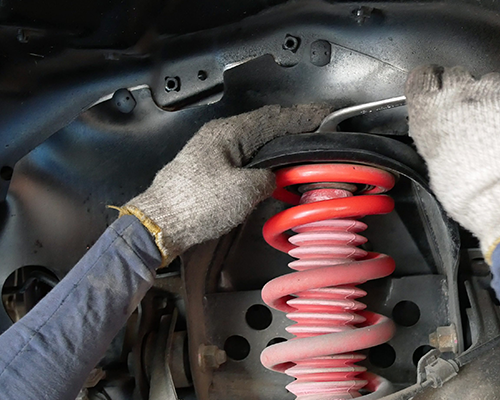
- Springs (Coil or Leaf): Support the vehicle’s weight and absorb shocks.
- Control Arms: Connect the wheels to the frame and allow for controlled movement.
- Ball Joints: Allow for smooth movement and steering.
- Bushings: Cushion the joints and reduce vibration.
- Sway Bars (Stabilizer Bars): Reduce body roll during cornering.
How to Service a Vehicle Suspension System
1. Safety Precautions
- Park the vehicle on a flat, level surface.
- Use wheel chocks to prevent the vehicle from rolling.
- Wear safety goggles and gloves.
- Use a jack and jack stands to lift and secure the vehicle.
2. Visual Inspection
- Inspect the shock absorbers and struts for leaks, dents, or damage.
- Check the springs for cracks, corrosion, or deformation.
- Examine control arms and ball joints for wear, rust, or damage.
- Look at the bushings for signs of wear or cracks.
- Inspect sway bars and their links for looseness or damage.
3. Checking Shock Absorbers and Struts
- Perform a bounce test: Push down on each corner of the vehicle and release. The vehicle should bounce up once and settle. Excessive bouncing indicates worn shocks or struts.
- Check for fluid leaks around the shocks and struts.
- Replace any worn or damaged shock absorbers or struts.
4. Inspecting and Replacing Springs
- Check the springs for sagging or unevenness.
- Measure the ride height and compare it to the manufacturer’s specifications.
- Replace any cracked, broken, or sagging springs.
5. Checking Control Arms and Ball Joints
- Inspect control arms for bends or damage.
- Check ball joints for excessive play by lifting the vehicle and trying to move the wheel side to side and up and down.
- Replace any worn or damaged control arms or ball joints.
6. Inspecting and Replacing Bushings
- Look for cracks, tears, or excessive wear in the bushings.
- Use a pry bar to check for excessive movement in the bushings.
- Replace any worn or damaged bushings.
7. Checking and Replacing Sway Bars
- Inspect sway bars and links for wear or damage.
- Check for looseness by trying to move the sway bar by hand.
- Replace any worn or damaged sway bars or links.
8. Alignment Check
- After servicing the suspension components, it’s essential to check and adjust the wheel alignment.
- Improper alignment can lead to uneven tire wear and poor handling.
- Have a professional alignment performed using a computerized alignment machine.
Preventive Maintenance Tips
- Regularly inspect suspension components every 12,000 to 15,000 miles or as recommended by the manufacturer.
- Replace suspension components in pairs (e.g., both front shocks) to maintain balanced handling.
- Keep an eye on tire wear patterns, as uneven wear can indicate suspension issues.
- Pay attention to any changes in vehicle handling, such as excessive bouncing, swaying, or noise.
- Ensure the suspension system is inspected during routine maintenance or when you notice any signs of wear or handling issues.
By following these steps, you can ensure that your vehicle’s suspension system remains in good working condition, providing a smooth ride, stable handling, and enhanced safety.